
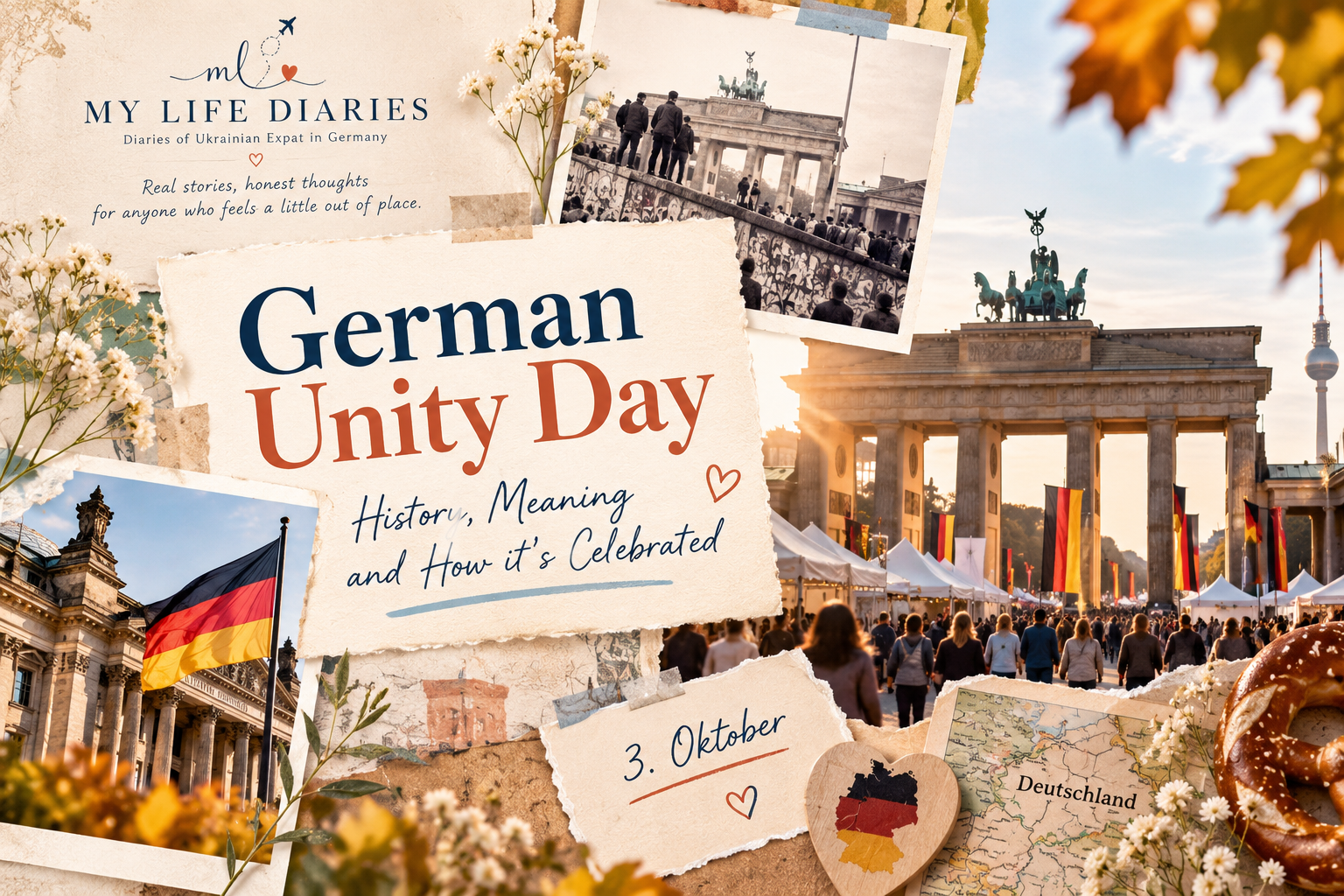
3rd October, or as you might know it, Tag der Deutschen Einheit, or German Unity Day. Before actually doing some deeper research, all I knew was that this is indeed a day off, it is a national holiday in Germany, and that shops are closed. That was all that mattered to me. Well, this year it fell on a kind of unlucky day of the week — Saturday, when most working people don’t go to work anyway, and when it’s one of the only days we can actually shop in Germany on a weekend (as you remember, Sunday is a day off for all shops and shopping malls here).
But, going back to the topic at hand — aside from my frustration at running out of food this weekend (as always, I forgot that shops are closed both days this week) — German Unity Day.
Long story short: German Unity Day signifies the long-awaited unification of East and West Germany after almost 40 years of being divided. It happened on 3rd October 1990.
Interesting fact: the unification itself actually began almost a year earlier, on November 9th, 1989, when the Berlin Wall fell. This moment was extremely significant for Germany, symbolically ending the Cold War split between East and West. From there, following the signing of the Einigungsvertrag (Unification Treaty) on August 31st, 1990, and both parliaments having ratified it, East Germany joined the Federal Republic of Germany on October 3rd. And just like that, after more than four decades of being separate countries with different governments, ways of life, and currencies, Germany became one country again.
However, I have to admit, such a significant day doesn’t quite feel like a big nationwide celebration in Germany. So, how is it celebrated, then?
- Host city rotates each year. Since 1990, a different federal state hosts the official celebrations each year. Interestingly, it’s whichever state currently holds the presidency of the Bundesrat. This year (2026), that’s Bremen — running the celebrations from October 2nd–4th under the motto “Viele Stärken – Ein Land” (“Many Strengths – One Country”). Berlin, as one could imagine, hosted the very first celebration back in 1990.
- A Bürgerfest (citizens’ festival). The host city organizes a multi-day open-air festival — food, music, culture, and booths representing all 16 federal states. You can taste and feel all of Germany in one festival.
- A Festakt (ceremonial act). The official part of the event, where you’ll hear speeches from various political figures about the meaning and significance of this day.
As I mentioned, it feels so different from the national celebrations in Ukraine. When it’s a national holiday there, it feels like a national holiday too. Not during the war, of course — all celebrations have been suspended until the end of the war.
And have you ever experienced German Unity Day in person in one of the host cities, or is this the first time you’re hearing about it?



Leave a Reply